
1 November 2026
Labour Contract or Turnkey Contract: Which Should You Choose?
The two common ways to engage a builder in Tamil Nadu — labour-only and turnkey — explained plainly: what each includes, who buys the materials, who carries the risk, and which suits your situation.
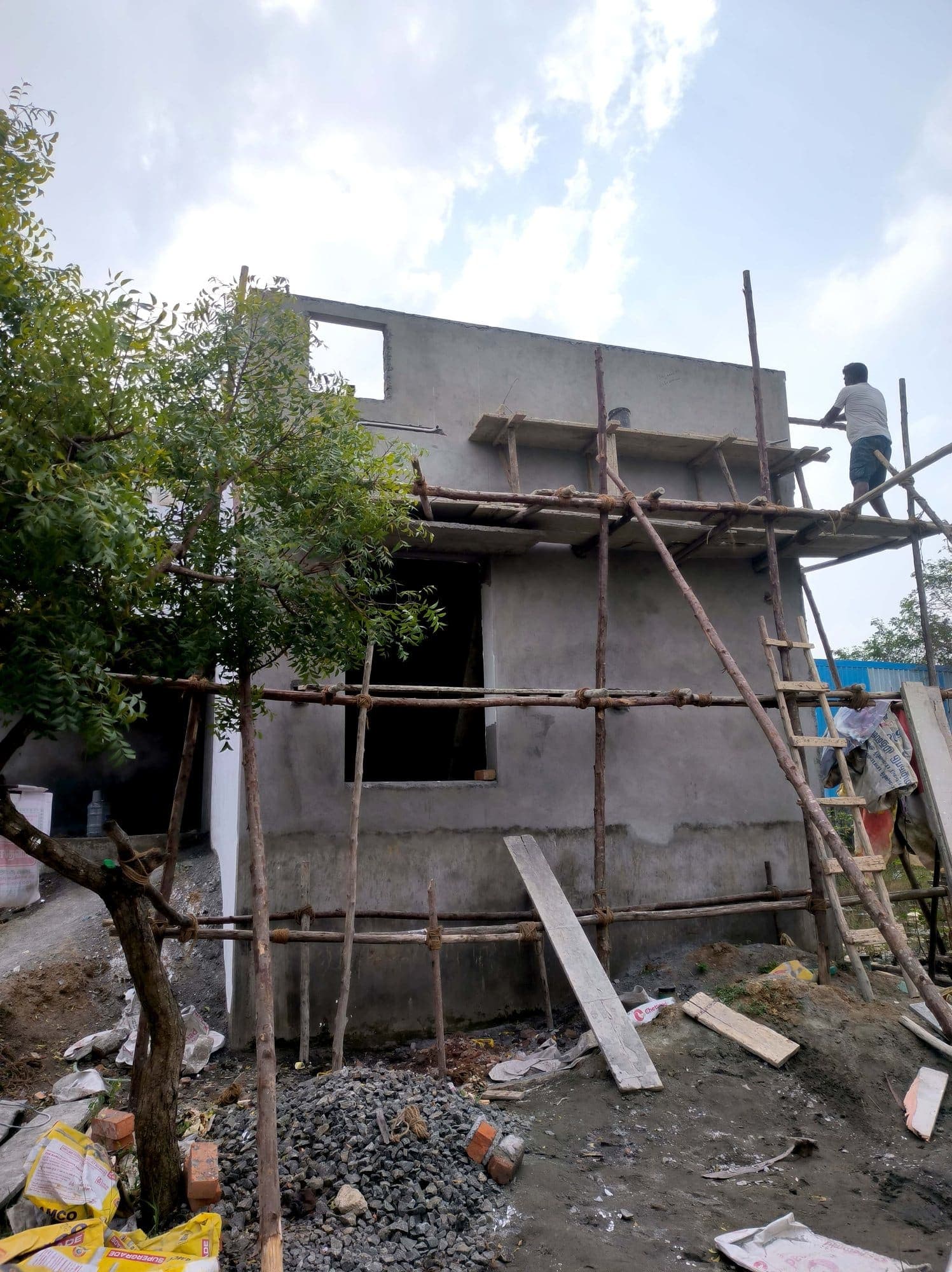
Before any drawing is finalised, you have to decide how you are engaging your builder. In Tamil Nadu it usually comes down to two arrangements, and the choice shapes your cost, your time commitment and who carries the risk when something goes wrong.
Labour contract
You pay the contractor for workmanship only. You buy all the materials yourself — cement, steel, bricks, sand, tiles, sanitary ware, electrical goods — and arrange their delivery to site.
- Suits you if you have time to visit the site often, some understanding of materials, and reliable suppliers nearby.
- The advantage: you control exactly which brand and grade goes into your house, and you see every rupee of material cost.
- The catch: material procurement becomes your job. Running out of cement mid-slab stops work, and the delay is yours, not the contractor’s. Wastage is also yours to absorb.
Turnkey contract
The contractor delivers the finished house for an agreed price — labour, materials, supervision and coordination included. You hand over the plot and take possession of a completed building.
- Suits you if you are working full time, living abroad or in another city, or simply do not want to manage daily procurement.
- The advantage: one point of accountability. If the wall is poor, it is the contractor’s problem whether the cause was labour or the material.
- The catch: the specification has to be pinned down in writing. "Vitrified tiles" is not a specification. Brand, size, grade and a rate band for each item is.
The question that matters more than the contract type
Whichever you choose, the detail that protects you is the specification sheet attached to the agreement. It should name the brand and grade of cement and steel, the type of bricks or blocks, the make of wiring and pipes, the tile sizes and rate band, and the paint type for interior and exterior.
Most disputes we hear about are not about dishonesty. They are about two parties who each assumed a different quality of fitting was included, and never wrote it down.
What to check before you sign, either way
- A stage-wise payment schedule tied to completed work, not to dates.
- A clear scope boundary — is the compound wall included? the sump? the overhead tank? the gate?
- Who pays for plan approval, and for the electricity and water service connections.
- What happens to extra work requested mid-build, and how it is priced.
- A defect liability period after handover, and what it covers.
We work both ways, and we will tell you honestly which fits your situation rather than which is larger for us. Send us your plot details and we will set out both options against your plan.
- labour contract
- turnkey construction
- building contractor
- chennai